Oruç Reis — Terror of the Mediterranean
c. 1474 – 1518, Tlemcen
Europeans called him "Baba Aruj" — a name that gradually became "Barbarossa" (Redbeard). This nickname, born of his red beard, was later given to his brother Hayreddin as well.
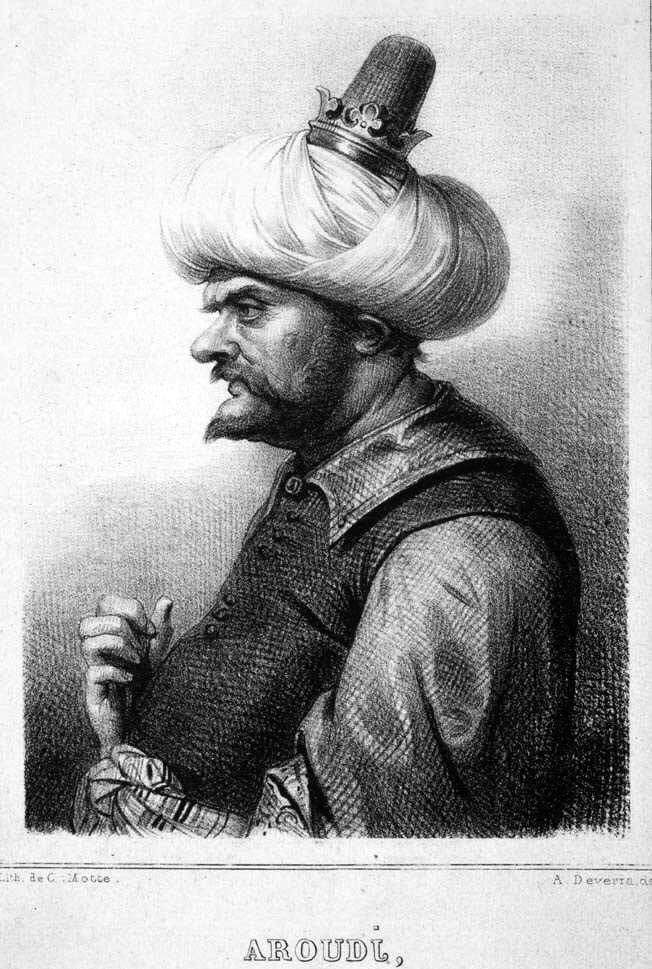
Birth and Family
Oruç was born around 1474 on the island of Lesbos (Midilli). His father, Yakup Ağa, was an Ottoman sipahi who had settled on Lesbos after migrating from Vardar Yenicesi. His mother, Katerina, was a woman of Greek Orthodox origin.
He was the second of four brothers: İshak, Oruç, Hızır (Hayreddin Barbarossa), and İlyas. The brothers entered the seafaring life together.
Captivity Under the Knights of Rhodes
While on a voyage to Tripoli with his youngest brother İlyas, Oruç was captured by the Knights of Rhodes. In the same engagement, İlyas was killed.
Oruç endured three years of captivity under brutal conditions. He was chained to a galley oar and suffered greatly in the dungeons of Rhodes. His brother Hızır's attempts to pay a ransom failed.
Eventually, Oruç managed to escape by slipping into a group of captives being released through the yearly intercession of Prince Korkut, the Ottoman governor of Antalya. This event proved to be the turning point of his life.
The Loss of His Arm
During a fierce battle with Spanish forces near the fortress of Bougie (Béjaïa) on the Algerian coast, Oruç was struck by a cannonball. The wound was so grievous that his left arm had to be amputated at the elbow.
Despite fighting with only one arm, Oruç Reis remained active on the battlefield — an extraordinary display of resolve that turned him into a legend on both sides of the Mediterranean.
Rescue of the Andalusian Muslims
One of Oruç Reis's most humane achievements was the series of rescue operations he organized to transport Muslims and Jews fleeing persecution in Spanish Andalusia to safety in North Africa. Working alongside commanders such as Aydin Reis, these missions saved thousands of lives.
The Conquest of Algiers (1516)
In 1516, Oruç Reis wrested Algiers from Spanish control. He established an independent state and declared himself Emir. Recognized as the protector of the Muslim population, he was embraced as a hero by the people of Algiers.
He built a powerful fortified city and erected a line of defenses against the Spanish threat, establishing what became the most formidable naval base in North Africa.
The Siege of Tlemcen and His Martyrdom (1518)
In November 1517, Oruç captured Tlemcen, then under Spanish influence. Spain dispatched a large army in response. Oruç mounted a magnificent six-month defense of the city.
When ammunition and supplies were exhausted, he attempted to break out with around 30-40 comrades. They were surrounded by Spanish forces. One-armed Oruç Reis stayed behind to buy his companions time to escape.
He fell to a spear wound. The Spanish beheaded him and placed his head in a jar of honey to send to the King of Spain as proof of his death.
"Despite having only one arm, Oruç Reis fought to his last breath. He sacrificed himself so that his companions might escape. He remains a symbol of courage and selflessness across the Mediterranean."
Legacy
After his martyrdom, his brother Hızır Reis (Hayreddin Barbarossa) took his place as ruler of Algiers, inheriting the "Barbarossa" name and his authority. By strengthening ties with the Ottoman Empire, Hayreddin carried the legacy that Oruç had begun all the way to the victory at Preveza.
Historians have described Oruç Reis as "generous, noble-hearted, compassionate, and merciful."
Related Pages
Frequently Asked Questions
Who was Oruç Reis?
An Ottoman corsair and the elder brother of Hayreddin Barbarossa. He conquered Algiers in 1516 and was martyred at Tlemcen in 1518. Europeans called him "Barbarossa" (Redbeard).
Where does the name "Barbarossa" come from?
From the Italian "barba rossa" (red beard). It was originally given to Oruç Reis because of his red beard. Europeans called him "Baba Aruj," which became "Barbarossa." The name was later applied to his brother Hayreddin as well.
How did Oruç Reis lose his arm?
He was struck by a cannonball during a battle near the fortress of Bougie. His left arm had to be amputated at the elbow. He continued fighting despite the loss.
How did Oruç Reis die?
In 1518, after a six-month siege at Tlemcen, he was surrounded by Spanish forces while trying to escape. He sacrificed himself to cover his companions' retreat and was killed by a spear wound. The Spanish beheaded him and sent his head to the King.
How was Oruç Reis captured by the Knights of Rhodes?
He was captured during a voyage to Tripoli. His brother İlyas was killed in the same engagement. Oruç spent three years as a galley slave before escaping by blending in with prisoners released through Prince Korkut's intervention.
Who did Oruç Reis rescue from Andalusia?
He transported Muslims and Jews fleeing Spanish persecution in Andalusia to safety in North Africa. These humanitarian rescue operations saved thousands of lives.